
Raise them higher
If we are ultimately tasked with helping to elevate the next generation of dietitians, what sense is there in pulling them down?

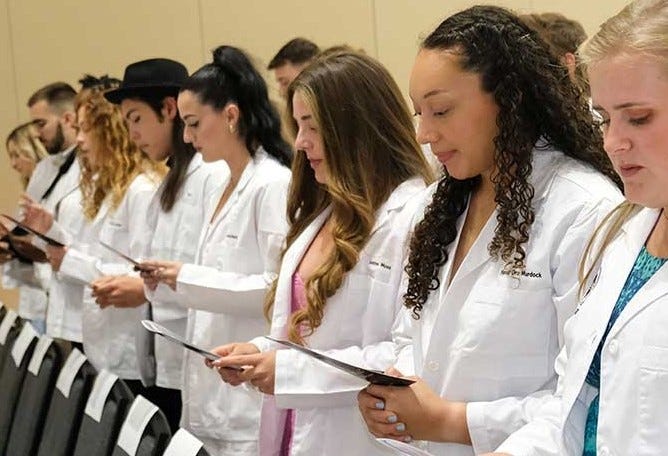
A dietitian’s work involves people, food, and health, which for all intents and purposes means we are pretty much everywhere. And for the many different jobs we fulfill, the one thing that commonly connects us (beyond food of course) is the call to be an educator. There’s hardly a dietitian’s job I can think of that will not require donning the teacher’s cap at some point, either to instruct the public, patients, or act as a preceptor formally tasked with training and mentoring dietetic interns (student dietitians, for the uninitiated).
But for those of us who make academic education our immediate career, the primary focus is twofold; strengthen the profession, and prepare the next generation of dietitians eager to enter the workforce. Our work in the classroom ultimately prepares them for practicum in the field, where our dietitian colleagues continue their training. It’s challenging work, when your purpose is to help your students meet and ultimately exceed your own knowledge, skill, and ability. But in this challenge there is great reward, as we ourselves are lifted and inspired by the students we are privileged to teach. An old Quaker’s proverb comes to mind — “Thee lift me and I’ll lift thee, and we’ll ascend together.”
So if we are ultimately tasked with helping to elevate the next generation of dietitians, what sense is there in pulling them down? It’s not common, but every now and then when speaking with peers, dietetic interns, or students, I’m related experiences of narrow-minded instructors who nearly (or successfully) derailed a career. You may have heard these as well. “I was told [by my instructor] I would never make it in this profession,” or, “My preceptor said I was not cut out for dietetics,” and perhaps the worst of all, “I just feel like I don’t belong here.”
Speaking plainly and to the point, this sort of talk should never be uttered from an educator to their student, however well-intended. If I’m offering an overextended benefit of the doubt, I see how an instructor or preceptor could observe a student failing to progress, and discourage them to continue on in what they perceive as futile efforts. And, I’ll grant that students will sometimes exit the field under no duress or pressure, simply because they have alternative career interests that don’t require becoming a dietitian. These latter students will indeed require counsel and advising on what else they can do with their dietetics degrees (this is in fact an accreditation requirement). But what about students who want to become dietitians? Who desperately pursue success yet still find themselves struggling or falling behind? It is these students, sometimes difficult to identify, who may ultimately crumble if someone in authority casts doubt on them. Discipline may sometimes be required. Remediation may and will likely be needed. But pressing for a student’s departure when they’re on the fence or desperate to succeed flies in the face of an educator’s duty.
But here again is the dilemma. Some students may love the field but decide on a career outside of being a dietitian. Some students may be uncertain, facing down ambivalence depending upon their experience in college. And some students are hanging on, just needing to know that someone believes in them. So how do you tell who is who? When does a student require remediation for careers outside of the field? And when do you offer them hope and motivation to carry on?
I think an experience from my undergraduate degree can apply here.
During a foodservice class, our DPD Director (Nora) was leading a discussion about management practices, including legal matters related to employment. One of those matters included the Americans with Disabilities Act, or ADA for short. Summarized, the ADA identifies a list of legally recognized disabilities for which an employer may not discriminate against when recruiting and hiring. Furthermore, it requires employers to make reasonable accommodations where possible for individuals who are otherwise qualified for the job.
“How do you know if a person with a disability is capable of performing the job?” she asked us. It was a great question, to which none of us had a good answer. Then she told us a story about when she was younger and assisting with the management of a large commercial kitchen. This kitchen had recently expanded, seeing the installation of some very expensive and top of the line equipment, including an automated power-loader dishwasher in the dish room. A new dish room supervisor was needed, so a search began, and one of the first people Nora interviewed was a gentlemen in a wheelchair. Though concerned about his ability to handle the job, Nora was instructed by her boss to invite the man into the dish room for a tour. So she did. After a short while and a few questions, the man told Nora, “Thank you for showing me around, but I don’t this job would work out for me,” then took his leave. Afterward, Nora asked her manager why show him around, knowing full well he wouldn’t be able to meet the job’s demands. “Nora,” her manager started, “You need to let him make that decision.”
It was a simple lesson; provide the right information, communicate the expectations, and leave people to decide what they’ll do. While it’s not a perfect comparison, I think this applies well for students who are struggling to perform in the field of dietetics. Be a support, provide our observations, but ultimately let students make the critical career decision without our unsolicited opinions tainting what they really want. It is a world of a difference to tell a student, “I don’t think you are cut out for this field,” versus, “I am concerned because you seem to be struggling. What’s going on? How can I help?”
Given the latter situation, you may very well have a student who says, “To be honest, this field is not what I thought it would be, and I guess my lack of interest makes it hard for me to stay motivated. I don’t really think I want to be a dietitian anymore.” In which case, remediation and counseling can and should proceed, because that was the student’s choice. But consider the student who may tell you, “I know, and I’m not sure why. I love what I’m studying and I really want to be a dietitian, but I don’t know what’s wrong. What can I do differently?” Now, you get to do what educators do. Teach. Guide. Support. Help them gain the vision that they need to see where they want to go.
As a side note, this is precisely what irritates me whenever I hear the retort, “You need to do your own research,” when issued as a dismissal. If you are trying to promote change, or better the perspectives of another, what does this actually accomplish? Perhaps your audience is educated on the subject, but merely disagrees with you. Perhaps they have studied, but are still not understanding. In either case, so long as there are questions and a willingness to continue to learn, you should continue to teach.
And for our students, perhaps this determination to raise them higher has a compounded effect. That our commitment and care for their education shows them that at the end of the day, after every challenge, someone cares. And if someone cares, that reinforces to a student something much more important. That they are wanted. That they belong. Quite frankly, it’s possible that this attitude of mutual purpose, kinship, and unity goes further to predict the success and achievement of students than we realize.
So raise them higher, and help them gain a greater view of the field. As the time draws near for them to make decisions on the direction of their career, trust that given this elevated vision and proper instruction, they will make the right choice. And as we help elevate their vision, in turn so will ours, and together the profession and its purpose will achieve new heights.